
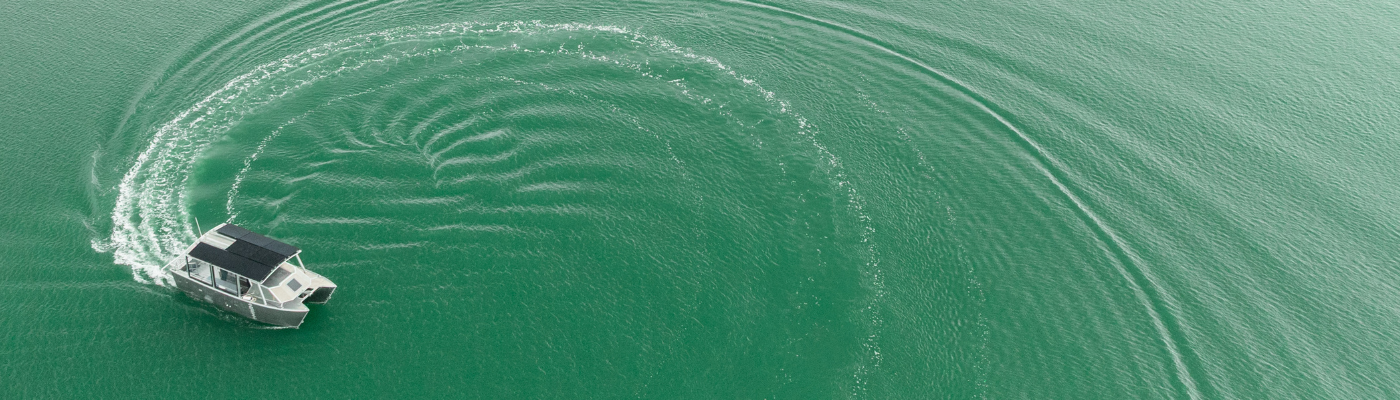
McKay was appointed by the United Nations Development Programme to deliver Samoa’s first low-carbon maritime transport solution, a fleet of five E-Alia vessels.
As part of the CAP-IT programme, a $37 million (USD) Japanese-funded Green Transformation initiative focused on accelerating the transition to low-emission and climate-resilient transport systems across the Pacific, McKay is delivering the design and manufacture of five solar/battery-propelled electric catamaran vessels to transport passengers between five villages on the small islands of Manono and Namua.
The introduction of the E-Alia vessels offers significant benefits to Samoa, a nation of islands where effective passenger transport is vital for connecting communities and fostering economic and social development. Unlike traditional passenger vessels that depend on imported fossil fuels, E-Alia vessels provide a more sustainable alternative. They lower operating costs, ensure a consistent supply of energy, and minimise environmental impacts. By reducing reliance on fossil fuels, E-Alia vessels can enhance the reliability and efficiency of passenger transport across the islands, ultimately supporting the well-being of the community and the economy.
Constructed from aluminium, each 10-meter electric catamaran will be powered by two electric outboard motors, with the capacity to carry up to 12 passengers at a speed of 6-8 knots.
The harbour trials showcased the vessels’ smooth handling, with successful tests of docking, reversing, tight turns, and steering response, demonstrating their readiness for safe passenger and cargo transfers. The sea trials simulated a full day of operation, including five round-trips between Manono, where four vessels will operate, and Upolu, covering journeys of up to 7 nautical miles.